
AI's Transformative Power in Inventory Management

These systems also predict demand spikes, supply chain disruptions, and seasonal variations, allowing businesses to prepare appropriate responses in advance.
Supply chain AI extends inventory management beyond warehouse walls to encompass the entire supply network. These systems monitor supplier performance, assess risk factors, and optimize procurement strategies based on real-time market conditions.
Integration with supplier systems enables collaborative planning and improved communication, reducing lead times and improving overall supply chain resilience.
Inventory analysis AI provides deep insights into inventory performance, identifying slow-moving items, optimizing product mix, and analyzing profitability by SKU. These insights enable data-driven decisions about product lifecycle management and inventory investment strategies.
Inventory optimization through AI delivers tangible results that impact the bottom line. Companies implementing AI inventory solutions typically see:
The return on investment for AI inventory systems typically ranges from 200-400% within the first two years, making it one of the most cost-effective technology investments for businesses with significant inventory operations.
Successful implementation of AI inventory management requires careful planning and phased execution. The process typically involves:
The key to successful implementation lies in starting with high-impact, low-risk applications and gradually expanding AI capabilities as the organization builds confidence and expertise.
The future of AI inventory management promises even greater capabilities through emerging technologies. Computer vision systems will enable automatic inventory counting and quality inspection. IoT integration will provide granular tracking of individual items throughout the supply chain.
Advanced machine learning models will incorporate external data sources like social media trends, economic indicators, and competitive intelligence to create even more accurate demand forecasts. These developments will further reduce costs while improving service levels and operational efficiency.
Can AI be used for inventory management?
Yes, AI significantly enhances inventory management through improved forecasting accuracy, automated reordering, and real-time tracking, leading to cost savings and better customer satisfaction.
What are the main benefits of AI inventory systems?
AI inventory systems provide improved demand forecasting, reduced carrying costs, automated reordering, real-time visibility, and better decision-making capabilities that lead to 15-30% cost reductions.
How accurate is AI demand forecasting?
AI demand forecasting typically achieves 85-95% accuracy rates, significantly higher than traditional methods that average 60-70% accuracy.
What's the typical ROI for AI inventory management?
Most businesses see 200-400% ROI within two years, with initial benefits appearing within 6-12 months of implementation.
How long does it take to implement AI inventory management?
Implementation timelines vary from 3-12 months depending on system complexity, data quality, and organizational readiness.
Modern businesses face mounting pressure to optimize their operations while reducing costs. Inventory management AI emerges as a game-changing solution that transforms how companies handle stock control, demand forecasting, and supply chain operations. This technology combines machine learning, predictive analytics, and automation to create smarter, more efficient inventory systems that adapt to changing market conditions in real-time.
The shift from traditional inventory methods to AI-powered solutions represents more than just technological advancement. It's a fundamental change in how businesses approach stock management, moving from reactive to proactive strategies that anticipate needs before they arise.
AI inventory systems leverage advanced algorithms to analyze vast amounts of data and make intelligent decisions about stock levels, ordering patterns, and distribution strategies. Unlike traditional methods that rely on historical averages and manual calculations, these systems process real-time information from multiple sources to create dynamic, responsive inventory strategies.
The core components of AI inventory management include:
Traditional inventory systems often struggle with accuracy, leading to stockouts or overstock situations that cost businesses millions annually. Inventory control systems powered by AI eliminate much of this guesswork by continuously learning from data patterns and adjusting strategies accordingly.
Demand forecasting AI represents perhaps the most significant advancement in inventory management. These systems analyze historical sales data, seasonal trends, market conditions, and external factors like weather patterns or economic indicators to predict future demand with remarkable accuracy.
Modern forecasting algorithms can achieve accuracy rates of 85-95%, compared to 60-70% for traditional methods. This improvement translates directly to reduced carrying costs and fewer stockouts, creating a more responsive supply chain that adapts to customer needs.
Automated inventory systems eliminate the manual effort required for reordering decisions. AI algorithms calculate optimal reorder points based on lead times, demand variability, and service level requirements. These systems can automatically generate purchase orders, communicate with suppliers, and adjust safety stock levels based on changing conditions.
The result is a self-managing inventory system that maintains optimal stock levels while minimizing human intervention and reducing the risk of human error.
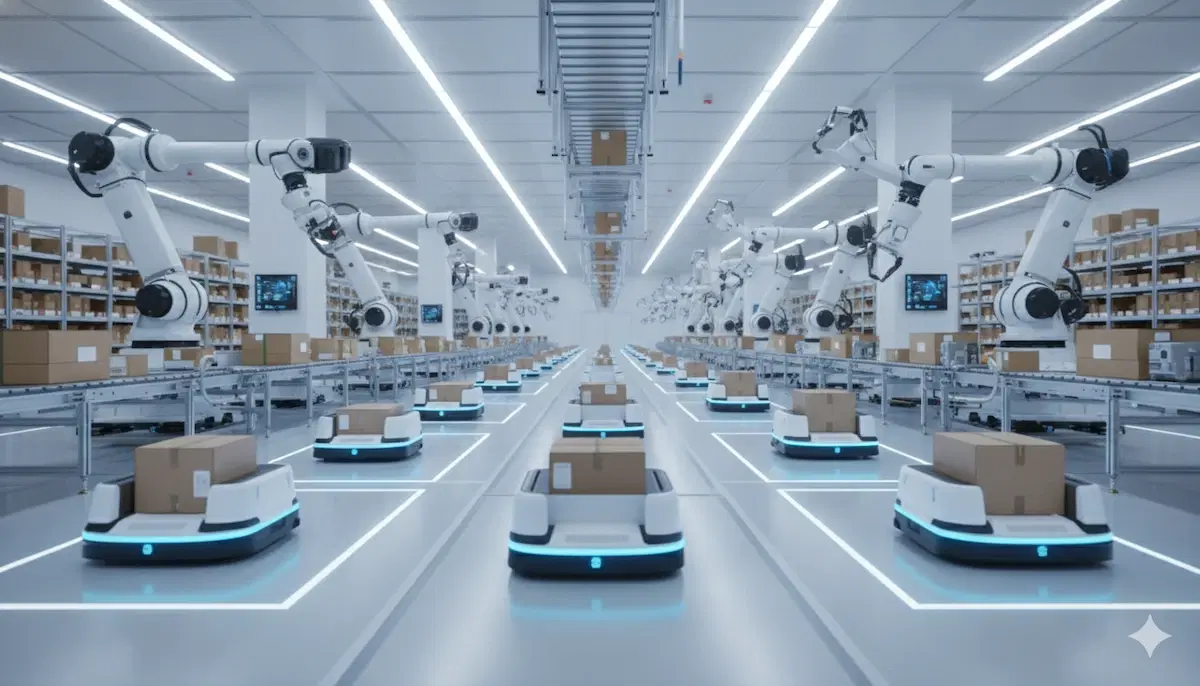
AI stock management provides unprecedented visibility into inventory levels across multiple locations. Advanced tracking systems use RFID tags, computer vision, and IoT sensors to monitor stock movements in real-time, ensuring accurate inventory counts and immediate updates across all systems.
This real-time visibility enables better decision-making and faster response to inventory issues, reducing the time between problem identification and resolution.
Warehouse management AI optimizes storage layouts, pick paths, and labor allocation to maximize efficiency. These systems analyze product movement patterns, seasonal variations, and order characteristics to determine optimal product placement and picking strategies.
Advanced algorithms can reduce picking time by 20-30% while improving accuracy rates, leading to faster order fulfillment and reduced operational costs.
Predictive inventory systems identify potential issues before they impact operations. AI algorithms can detect unusual patterns that might indicate theft, damage, or data entry errors, enabling proactive intervention.